 WTFasteners
How Should Fasteners Be Packed for Sea Shipment?
Fasteners are heavy, dense and sensitive to moisture — sea freight punishes bad packing. This guide walks through cartons, moisture protection, pallets and container loading as they are handled for export.
Why packing matters on a long sea route
A container of fasteners can spend weeks at sea — through humid ports, salt air and rough handling at both ends. Fasteners are dense, heavy and usually coated, so bad packing shows up as rust blooms, crushed cartons and mixed-up sizes on arrival. Good export packing does three jobs: keep moisture out, keep the load from moving, and keep every carton identifiable when the container doors open. It is one of the cheapest forms of insurance on the whole order.
Cartons and small boxes
The standard export unit is the sealed carton: screws, bolts and nuts packed by count or weight, each carton closed, taped and marked. Distributors often order small boxes for retail and distributor shelves, with a printed label showing the product, size and quantity. Private-label packing — the buyer's own brand on the box — is a standard export option and is confirmed before production, so the right cartons are ready when the goods come off the line. Mixed packing inside one container is normal; just confirm the packing per line item.
Moisture and corrosion protection
The coating — bright zinc, galvanized (G.I.), Dacromet, Ruspert or hot-dip galvanizing — protects the fastener, but the packing protects the coating. Cartons for sea shipment are typically lined or wrapped: an inner plastic bag or shrink film around the product, sealed against humid air, with desiccant sachets inside the carton for long voyages and tropical destinations. The cartons themselves should be strong export-grade board; a carton that survives the factory floor but collapses in a stacked container helps nobody.
Pallets and container loading
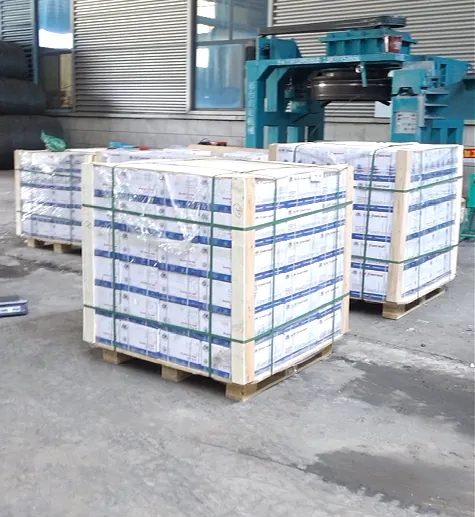
For container loads, cartons are stacked on pallets, shrink-wrapped and strapped so each unit moves as one. Palletizing keeps cartons off the container floor — away from any condensation — and lets forklifts handle the load without tearing cartons open. Load planners spread the weight evenly: fasteners are heavy for their volume, and a container loaded unevenly is a rejected container. Cartons are marked and sequenced so unloading at destination is straightforward.
Marking: make every carton identifiable
Every export carton should carry the product name or standard, the size, the quantity, the carton number and the buyer's mark. Clear marking is what turns a container of identical brown boxes into an inventory a warehouse can receive in an afternoon. It also matters at customs: the packing list, the marks on the cartons and the goods themselves should all tell the same story.
Confirm packing before the goods are made
Packing is cheapest to change on paper. Confirm the carton type, labeling, palletizing and any private-label artwork before production starts, and it flows through the order automatically. WTFasteners — Hebei W.T Fasteners Co., Ltd. — is a source factory in Yongnian, Handan, China: confirm your packing requirements when you request a quotation — WhatsApp +86 138 0310 6448, postmaster@wtfastener.com.
Have a specification to source?
Send the standard, drawing or sample details to route your inquiry.